How the censorship of the word “rape” can promote a sexuality without consent
May 14, 2025
How can the censorship of the word “rape” in an artwork that depicts it make that violence desirable and promote a sexuality without consent? Analysis of the relationship between censorship and desire in the fruition of the 17th century sculptural complex “The Rape of Proserpina” by Bernini.
Keywords: Female Sexuality, Desire, Rape, Consent, Censorship, Glamourization of Violence, Artwork.
Introduction
In this essay I want to explore how the censorship of the word “rape” from the title of an artwork that depicts it can influence the desirability of the violence itself and the promotion of a sexuality without consent. To do this I decided to analyze the relationship between censorship and desire in the fruition of the 17th century sculptural complex “The Rape of Proserpina” by Bernini, whose Italian title, contrary to the English one, reports ratto (abduction) instead of stupro (rape). Returning to the discourse of desire as treated in Ahmed’s Queer Phenomenology I want to highlight how the removal of the word “rape” from the title of the artwork also removes female sexuality, female sexual agency and the trauma associated with its violence, facilitating not only the objectification of the woman and the orientation of the viewer’s desire towards male desire; but also favoring a “glamorized” normalization of the violence represented by the statue.
In developing the topic, I was influenced both by my childhood passion about Baroque and by my professional experience as a History teacher. Therefore I decided to address the essay using the auto-ethnographic method and creating a narrative that intertwines theoretical approach with my own memories.
In the first two paragraphs I give a general context for my topic and I develop the relation between censorship and desire, arguing that by censoring the traces of rape from the title, female sexuality, agency, trauma and objectification are erased and female desire dis-oriented. In the third paragraph I show how the censorship of the word rape facilitates the process of normalization of heterosexual men's violence against women and how this normalization is reinforced by the glamorization of violence that inserts men's rapacity into a romanticized heteronormative narrative pattern. This passage is fundamental to talk about both the dehumanization of women and the inevitability of violence that together with the dis-orientation of female desire will represent, in the fourth paragraph, my reading frame for the desirability of sexual violence.
I used as reference the texts of Skwiot on translation and censorship, of Buckley on the representation of rape, of MacKinnon on the theme of the normalization of violence, of Rich on the heteronormative framework within which gender narratives are placed and of Cahill on consent.
Despite the Latin names in Bernini's statue's title, I chose to call the protagonists of the myth with their Greek names for fidelity to the original myth. Proserpina is therefore Persephone and Pluto is Hades.
I believe my essay is important to question the patriarchal narrative that has produced the art that we now consider masterpieces and to reflect on how behind a simple title there can be a system that encourages and supports the normalization of violence against women and its consequent internalization by women themselves. In a context where violence by heterosexual men is seen either as something that women must inevitably endure or as something that women fundamentally desire (Fineran and Bennett 1999; Stanko 1985), I believe it is essential to reflect on how women’s sexuality is both spectacularized and denied. Even if this happens through a word, or the lack thereof.
Baroque auto-ethnography: The Rape of Proserpina and the mystery of abduction
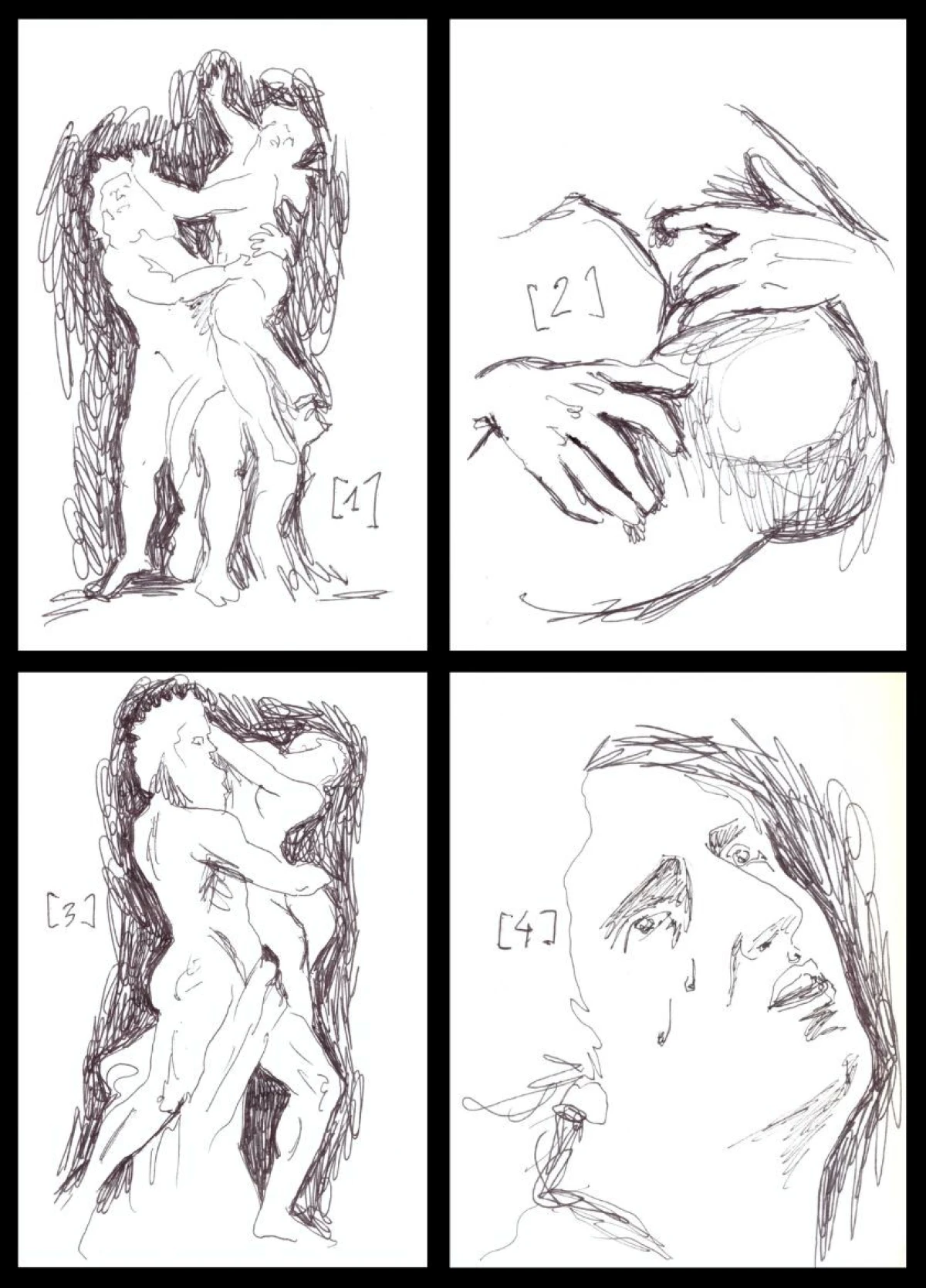
As a hobby, my grandfather restored 17th century furniture, my father painted Baroque subjects and my mother collected copies of Capodimonte porcelain: I grew up in an environment where Baroque was not at home, it was home. For me, the works of the sculptor Bernini have always represented an artistic, cultural and, in a certain sense, familiar apex. I spent hours watching Hades’ fingers sink into Persephone’s skin [2], not at all disturbed by the fact that the scene represented a kidnapping and wondering, indeed, how it was possible to make marble seem so soft. It took me until I was thirty to realize that I had always asked myself the wrong question.
While I was teaching in an Italian middle school, a student exclaimed, “Look at how Hades is fondling her so well!”. The joke was a comment on the image in the History book that used Bernini’s sculpture [1] as a symbol of the baroque period. Although the photo showed the detail of Hades’ hands pressing on Persephone’s soft body, the same one that had fascinated me throughout my childhood, my student’s exclamation caused me to wake up, and it was like seeing the statue for the first time. That day a different question came to mind: “What is Hades doing?”
For the first time I was realizing that Bernini’s statue was depicting a rape. It was not a matter of casual ignorance: the Italian title of the work, unlike the English one, contains the word abduction (ratto), not rape (stupro).
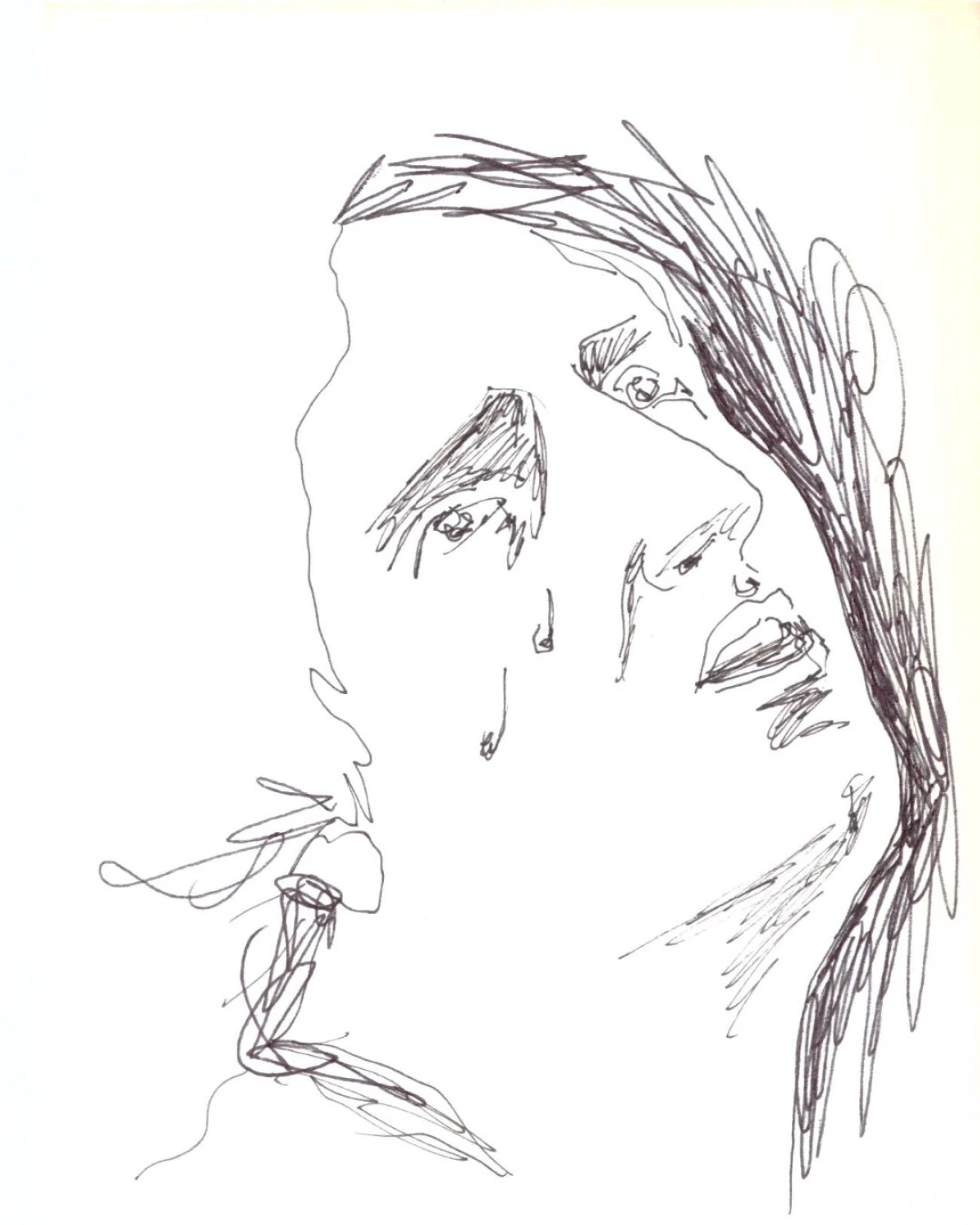
The abduction of Persephone is a Greek myth born to explain the origin of the seasons and it tells how Hades, full of desire for the young Persephone, kidnapped and married her against her will (Zissos, 1999: 107 – 108). If the Baroque Period had lost belief in the etiological explanation of seasonal cycles, it remained fascinated by Greek theatricality (Buckley, 2012: 9) and the assertion of masculinity that the staging of rape entailed (Smith, 2004: 132), as can be seen in Bernini [3] in the imposing physicality of Hades compared to the small body of Persephone (Kenseth, 1981: 201). I too was fascinated by the same thing. What struck me, however, when looking at Bernini's statue was not the macho muscularity of Hades; it was the overwhelming sensuality of vulnerability in Persephone. Although tears were carved into Persephone’s face and her expression was one of heartbreaking desperation [4], I did not perceive the trauma but, on the contrary, I felt an indescribable sexual tension. In a certain sense, I wanted to be her.
Part of what I perceived looking at the statue was the “dramatic interaction with spectator” that Baroque art required (Buckley, 2012: 8). It was precisely because of this spectacularization that Bernini was commissioned to represent the sculpture: the abduction is the moment of the myth that contains the greatest dramatic tension. But, as Buckley recalls, it is also the one with the greatest ambiguity for the spectator who, seeing only that instant frozen in the marble, asks: why is he abducting her? What happens after the abduction? (2012: 2). Focusing on the act of kidnapping and not on what it implies is what generates ambiguity: the rape of Persephone is implied but unspoken; the trauma is repressed. The Italian title confirms and amplifies this grey area: not rape but abduction; sexual violence is thus censored. The choice of words is never casual and is never without consequences, as Skwiot points out:
"The accountability lies with writers, translators, and editors who, in failing to distinguish between translation, approximation, and conjecture, negligently merge terms related to abduction and sexual assault. This rhetorical imprecision not only fails to contribute to the earnest consideration of sexual assault but also risks belittling the victims by diminishing the sexual nature of the crime or unnecessarily assigning a sexual assault crime to abduction (2024: 30)".
Unlike the English word “abduction” which is a recognizable and used term, its Italian equivalent “ratto” is neither recognizable nor used; in fact, the Italian Etymological Dictionary even lists it as a Latinism specifically indicating the “kidnapping of women” (DEO, 2008). For me as a child, this word meant absolutely nothing: “ratto” was far from words like violenza (violence) or stupro (rape) which imply an immediate sense of alarm. The title reassured me, it allowed me to enjoy the beauty of the statue without having to worry too much about the narrative it implied. “It’s just a kidnapping,” I said to myself. After all, I thought, what reason was there to wonder? The statue was in a museum and in thousands of books! Places that I – mistakenly – had always considered spaces of “truth” or, using the words of Spring and Mcintyre, “neutral, objective and trusted knowledge-legitimating institutions” (Spring and Mcintyre, 2020: 221).
The oppression of a strong body over a weak one thus became, in my childish imagination, a normal scene of passion; the heroine’s protagonism became her being the object of man’s desire and not the subject of the action; and my own desire was oriented not in the direction of that of Hades (the desire of one who wants and takes), but towards the non-desire of Persephone (who does not want and lets herself be taken).
How to do things with words: censorship and desire
While taking into account that the choice of the word ratto (abduction) instead of stupro (rape) can be explained in terms of linguistic context (common use of the word, continuity with Latin), literary and mythological context (adherence to the narrative, tradition), performance context (relationship between the text and the work) and historical, religious, philosophical and legal context (Morales, 2016: 62), I choose to define the removal of the word “rape” as censorship to the extent that it suppresses any parts that are considered obscene, politically unacceptable, or a damaging to morale (OED, 2025). As Skwiot argues that the ethical consequences of inadequate translations are the transmission of the wrong message and the generation of an inadequate portrait of what the work represents (2024: 36), so I argue that the sublimation of the word rape - as the result of a semantic, narrative and cultural choice - should be considered censorship to the extent that it suppresses the traces of a sexual violence. This censorship prevent the observer from seeing such violence as an abhorrent violation of a woman's body that reduces her to an object. And it can also orient female desire towards male desire by shifting attention to the physical outburst (normalization of violence) and creating a romanticized portrait of the coercion (glamorization of violence).
When I was little I didn’t believe that words were important. They are just words, I told myself, actions count. I was wrong: even with words things can be done (Austin, 1975). Words are actions that respond to social norms, they do not describe but construct meanings; words, by naming things, show them, make them visible (Wittgenstein 2021: 7, 23, 546). In a world dominated by patriarchal language (Irigaray, 1985: 205), “where language speaks the body” and the “speakers are embodied” (Woodward, 2009: 111) censoring a word that concerns female sexual trauma means making not only the trauma but also female sexuality and female sexual agency invisible.
Hearing my student joke about the brutal way Hades touched Persephone showed me for the first time something I had looked at for years without ever seeing: abuse. I had never realized it was there because it had never been made visible in the title, in the schoolbooks, on the information plate at the Museum. Words did not call violence by its name: rape. So violence had become invisible: the word and all the trauma it described had been censored inside a “ratto.” And that “ratto” had been for me not only a curtain drawn on everyday reality, a denial of the crime against women, of their trauma, objectification and sexual agency, but also a watershed for my desire. It marked the limit between what was acceptable desire and what was not.
If Rich reminds us how censoring non-normative sexualities is a way of imposing a dominant sexuality and marking what kind of desire should be considered legitimate (Rich, 1980), I argue that the censorship of the word rape imposes the violence of the dominant sexuality as acceptable behavior and it marks what desire is legitimate; in the case of the “Rape of Proserpina”: that of Hades.
For me, the removal of violence against women and the imposition of men desire has also acted as a form of control over my own knowledge. As Funess writes:
"Censorship is therefore a form of knowledge control depending on the institution—the judge— that can work to make women invisible and have to self-censor, thus marginalizing them and their voices. […] It is evidenced by censorship practices determining what bodies can be shared and how (Funess, 2019: 2)".
My fascination with Persephone, my desire to be her, to be a creature so violently desired by a god, is what Rich calls “false consciousness” (1980: 38): the fallacious belief that being a woman necessarily means being sexual prey (1980: 22), the object of the passion. A belief that I consider created by the hijacking of desire induced by censorship. I maintain that erasing the traces of sexual violence (rape) from the height of scenic pathos (abduction) not only erases a crime, it also erases its undesirability. Imposing male desire not only removes female desire but it also implies that women do not have one, therefore denying the possibility of discovering what female desire is (Davis, 1999: 28-30) and where it is oriented.
I argue, taking up Ahmed's words, that people are oriented towards objects that they "recognize" (Ahmed, 2006: 1) and are moved "towards and away" from them; that their bodies "take shape through tending towards objects that are reachable, that are available within the bodily horizon" and that what causes this movement, this orienting towards something, are the emotions that people feel in relation to those objects (2006: 2). With Ahmed I argue that spatiality is sexualized (2006: 1) to the extent that the objects that constitute it are sexualized in turn; and that the spatiality of sexual desire is therefore also sexualized (2006: 67) to the extent that sexual desire is circumscribed and oriented in a space that has already been sexualized previously.
If in my body horizon - as a person with a baroque childhood - there is the statue of The Rape of Proserpina, if I recognize this object as the symbol of my favorite historical period and as the pinnacle of artistic magnificence, my feelings of familiarity and admiration inevitably orient me towards it. If this object, “reachable” and “available” in the familiar space of my reality as a History teacher and art consumer, presents itself as a sexualized place where male desire represents the only point of view because women desire, sexual agency and sexuality have been censored together with violence and trauma, how can my desire position itself if not by orienting itself in the only possible direction? My emotions, positively conditioned by the censorship of traumatic elements and of female agency, orient my desire to adhere to the desire that the statue suggests to me: the desire to be desired as an object in a violent way, regardless of my desire, my agency, my will. More than an orientation, I consider it a dis-orientation.
It's just a kidnapping! Glamorized normalization of violence and objectification
I argue that the censorship of the word rape, in addition to dis-orienting female desire, leading it to identify with male desire and therefore with the non-desire of Persephone, is also the basis of the normalization of male violence against women in the heteronormative framework of gender relations (Tolman et al. 2003); and that this normalization (Ingraham 1994) is in turn reinforced by a strong glamorization of violence, which passes through the romanticization of male dominance (Arceo, 2021) and which dehumanizes women by objectifying them (Nussbaum, 1995). I use the term “glamorization” and not Arceo’s “aesthetization” because I want to include in the phenomenon not the simple aestheticization of violence but also its romanticization.
When as a child I looked enthralled at Bernini’s statue, ignoring the removal of the rape and repeating to myself “it’s just a kidnapping”, I didn’t realize that inside that “just” there was already the attenuation of a violence. The kidnapping didn’t seem such a violent thing to me. After all, I told myself, there was the theme of romantic kidnapping even in the 1954 musical “Seven Brides for Seven Brothers” where seven brothers kidnap the seven girls they like and they all end up getting married happily ever after! In my childhood imagination, kidnapping had already been inserted into a familiar and romanticized landscape well before I discovered rape.
Stanko, analyzing the relationship between cultural narratives and the normalization of male violence against women, shows how many shared ways of speaking have a heteronormative matrix, how they constitute a recurring pattern in people's conversations and how this pattern is often used as an interpretative (and normalizing) frame for male sexual violence (Stanko, 1985). Thinking back to what I felt about The Rape of Proserpina, it is not difficult for me to remember how it was in a certain way natural for me too to justify Hades' brutality with the power of desire that Persephone aroused in him. In this way I normalized rape by unconsciously resorting to three different normalized narrative patterns: that of the man who cannot control his impulses (Davis, 1999: 29), that of the woman who rejects the man's advances because she has a "milder" nature (Wolf, 1998: 153) or because she is a “female eunuch”, a creature lacking any sexual agency (Greer, 2020). And finally the pattern of female vulnerability and objectification that ends up exciting the man (MacKinnon, 1979: 220).
If on the one hand this normalization of violence was possible because the raw reality of rape had been censored from the scene, on the other hand the normalization of Persephone's suffering was facilitated by the fact that, although the statue was dedicated to Persephone, she appeared to me as a minor character. In this regard Wood, in a research on the normalization of violence within romantic heterosexual relationships, emphasizes how all her interviewees placed themselves “within Western culture’s primary gender narrative” and how this necessarily implied a dominance of the man and the relative “deference” of the woman (Wood, 2001: 239). But the perception of “deference” that I had of Persephone was not only linked to the gender narratives highlighted by Wood.
I argue that the “overwhelming physicality” of Hades’ body (Buckley, 2012: 9) represents the romanticization of male dominance; and that this romanticization is embedded in a process of glamorization of violence that contributes to making Persephone a “minor” figure, not only in stature but also in her human characterization. As Allee also highlights:
"Like many goddesses in Greek mythology, Persephone is rarely granted complexity. She is defined as a daughter to Demeter and a wife to Hades. She is subject to others’ actions but is rarely able to act herself. Persephone is an object, despite her central role in her own abduction myth, and this positioning has critical effects in the myth’s reception (Allee, 2019:7)".
I believe that the glamorization of violence through the romanticization of Hades' brutality sharpens the spectacularization of the victim, accentuating her objectification: it is the romanticization of brutality that eroticizes both Hades' desire and Persephone's vulnerability by subjectifying the former and objectifying the latter. Persephone is first the object - and not the subject - of the action and then the object - and not the subject - of desire. And it is the radical objectification of Persephone that made her in my eyes a "minor" figure because it dehumanizes her, taking away the human quality of the subject and attributing to her the imperturbability of the object (Nussbaum, 1995: 249–291). I argue that it is precisely the objectification of Persephone, facilitated by the censorship of her rape in the title and by the process of re-orientation of desire towards that of Hades, that allows the justification of the violence that the woman suffers (Volpato, 2011) in what for me was “only” a kidnapping; and that it is always her objectification that prevents the observer from an empathic identification with her (Romito, 2020) reducing the intensity – and importance – of her suffering (Cantarella, 1981). As I recalled in the first paragraph: her tears did not stop my desire.
When my student, looking at Hades’s arms around Persephone’s body, exclaimed with amusement “Look at how Hades is fondling her so well!” he had already absorbed the glamorization of violence and the dehumanizing objectification of Persephone: his desire identified with Hades’; and, as for me, Persephone’s non-consent and her despair occupied a minimal, if any, space of his attention.
I call this process “double repression of violence” insofar as violence is censored in the title and also censored by Persephone’s objectified body; and I argue that this double repression is resignified by a “double legitimation”: the violent action, doubly emptied of its negative charge, is positively legitimized twice. By its normalization and by its desirability.
Inevitable duplications and useless consents
Despite Persephone’s “minority” and her dehumanization, I wanted to be her. Seduced by the eroticization of the sculpted bodies, ignoring the trauma of rape removed by censorship and orienting my desire towards the male one, I dreamed of the spectacularization of my own being an object. I wanted to impersonate that eroticized vulnerability that Persephone embodied; I wanted to be Hades’ desire; and while I wanted this, I looked at myself from the outside, with his own eyes. This is the phenomenon of doubling that De Beauvoir describes: “[the girl] becomes an object, and she sees herself as object; she discovers this new aspect of her being with surprise: it seems to her that she has been doubled; instead of coinciding exactly with herself, she now begins to exist outside” (De Beauvoir, 1956: 335). The same doubling is also reported in Burrell’s analysis of male violence, where the shift of focus from violence and the relative naturalization of its inevitability create a “dissociation from the problem as if it was separate from the participant’s lives” (Burell, 2023: 336). Burell’s observation is particularly significant because it places the doubling right within the pattern of normalization of violence, underlining how it is this same pattern that causes a perception of inevitability, almost as if violence were something “simply given”, “natural” or “biological” (Silverbloom, 2024: 818; Schippers, 2007: 91; Burell, 2023: 344).
I argue that the doubling I felt when looking at the statue, like the one cited in De Beauvoir and Burell, is the direct consequence of the double removal of violence and its parallel double legitimation. I believe that it is precisely this doubling – that is, the distancing from one’s own self as a subject – that allows not only the acceptance of violence but also its desirability. If, as I argued in paragraph 2, people's desire is oriented towards objects they consider valuable (the abduction and not the rape of Proserpina) (Ahmed, 2006: 74) and if these objects are sexualized (eroticization of Hades' brutality), then desire will also follow this same sexualization and will be constructed by the identity that inhabits that object (the desire of those who admire the statue identifies with the desire of Hades) (Ahmed 2006: 67; 95). And how could it be otherwise if the entire space of culture has a heteronormative and phallocentric imprint? (Brock & Persson: 2025; Rose: 1995).
I cannot say that I desired rape to the extent that, as a child, all I knew about rape was the exceptionally serious position it occupied in adult discourse. But I can say that I desired to be desired in the same brutal way that Hades desired Persephone, because I did not perceive it as brutal but as inevitably passionate. Although Brownmiller argues in my direction, declaring that women's rape fantasies are evidence of male domination of culture, suggesting their complete disappearance thanks to feminism (1975: 322), I only partially agree with her. Quoting Critelli and Bivona on their study of women's fantasies:
“Certainly, the culture is permeated with depictions of men as conquering sexual heroes and women as vulnerable sex objects, and one way of developing a fantasy storyline is to combine these depictions into a theme of rape. [But] several studies indicate that roughly 10%–20% of men also have fantasies of being forced into sex. In addition, research […] has found that women who espouse feminist beliefs are just as likely to have fantasies of forced sex as are other women (Critelli & Bivona, 2008: 64)".
Although I agree with a phallocentric view of culture and the impact that rape culture has on people's imaginations, I only partially agree with Brownmiller insofar as my point here is not so much whether or not one desires rape in itself, but rather not realizing that one is desiring it. What I consider serious is not only realizing that one's desire is in reality a form of non-desire but also that what one desires/does-not-desire is violence rather than love (Cahill, 2014: 303). If violence is made inevitable and the woman finds herself unconsciously desiring it as a form of love, what role does consent have in this frame? If I want the man to take me regardless of my will, it will not be the man who ignores my will but I who will desire my lack of consent as part of the love game. Where does the man's responsibility fit into this picture?
What I am claiming in this essay is the recognition of women about their own desire (Cahill, 2014). A recognition that I am convinced can be stimulated by the right words in the right places: just as the few words of my student caused me to wake up that day in class, so the word “rape” in the title of the statue could have signaled an alarm and therefore a diversion of my desire.
Conclusion
As I have shown in the previous paragraphs, the censorship of the word “rape” from the title of the artwork also censors and make invisible the violated sexuality of the woman, the objectification of her body, the trauma she has suffered and the fact that she does have a sexual agency, allowing an identification of the desire of the viewer with the male desire. To the extent that removing the word “rape” relocates the scene represented by the statue in an acceptable landscape, I argue that this orientation of desire is reinforced by the normalization of violence. I further sustain that Bernini’s eroticization of Hades’ brutality facilitates the process of glamorization of violence; that it has a strong “repercussion on the normative organization of the affects and emotions” (Arceo, 2021: 2) ending to present itself as “the surface of normal love between adults” (Benjamin, 1980: 144). In this process I consider Persephone’s objectification both as a consequence and a means through which violence is first perpetrated and accepted and then normalized. In this way I underline the path of a double disappearance that feeds on itself: that of the sexual violence from the title and that of the sexual violence from the objectified body of Persephone. I therefore place the violent action, emptied of its criminal and traumatic load, in a second process, that of double legitimation: violence as normal and violence as desirable.
I argue that if the violence of male domination is interpreted as normal, because it is inserted into the romantic narrative of the heterosexual relationship, then it is also perceived not only as inevitable but also as desirable. If rape as trauma is removed together with the word, if violence is glamorized and made desirable, I consider it important to reflect on how the presentation of a work of art, especially if considered a cultural classic, can influence the perception and consolidation of toxic gender narratives.
This reflection is essential because Bernini's work is not a unique case in the classical artistic panorama but, on the contrary, is part of a larger repertoire of rapes (mythological and historical) presented as "abduction" in the Italian title, and uncritically celebrated as masterpieces. Among the many, I report "The Rape of the Sabine Women" renowned for its depiction by Poussin, and "The Rape of Europa," painted by Tiziano, Veronese, Tiepolo, and Piazzetta. Thinking that this toxic gender narrative is simply a product of those times means exploiting the historical-cultural context to justify it and once again accept it as inevitable. But it also means offering a partial and incorrect reading of the history of art which, instead, has had minds capable of challenging the mainstream male misogynistic gaze and offering other readings of the same themes. As the Italian Renaissance painter Artemisia Gentileschi did, both in life and in her works.
Showing how consent, if related to the inevitability of violence and its eroticization, can be useless is important not only for the male audience but also for that part of the female audience that, as in my case, has unconsciously internalized violence, objectification and male desire. In this context, taking into account female sexual agency and the process of objectification of women bodies to question the role of censorship of words and the role of female sexual desire that relate with them, results indispensable.
Cited Works
Arceo, C. (2021). “Aestheticization of Violence and Politics of Perception”, Academia Letters, Art. 2289. Available at: https://doi.org/10.20935/AL2289 (Accessed: 14 May 2025).
Ahmed, S. (2006). Queer Phenomenology: Orientations, Objects, Others. Durham: Duke University Press.
Allee, P. (2019). “Persephone, Victim or Goddess? A Feminist Analysis of ‘The Rape of Persephone’”, Polygossia, 23, pp. 3–24. Available at: https://sigmataudeltaisu.wordpress.com/wp-content/uploads/2020/04/polyglossia-2019-fall-1.pdf#page=5 (Accessed: 14 May 2025).
Austin, J. L. (ed.) (1975). How to Do Things with Words. Cambridge: Harvard University Press.
Benjamin, J. (1980). “Rational Violence and Erotic Domination”, Feminist Studies, 6 (1), pp. 144-174. Available at: https://www.jstor.org/stable/3177655 (Accessed: 14 May 2025).
Brock, M. and Persson, S. (2025). “Female Desire in Phallocentric Industries: A Duo-ethnographic Interrogation”, Organization, 32 (4), pp. 566–583.
Brownmiller, S. (1975). Against our Will: Men, Women, and Rape. New York: Simon & Schuster.
Buckley, S. (2012). “Persephone and Hades: A Study of Representation in Art and Culture”, Student Scholarship, 13, pp. 1-15. Available at: https://digitalcommons.lindenwood.edu/student-research-papers/13 (Accessed: 14 May 2025).
Burrell, S. R. (2023). “‘Cause We’re All Just Part of the System Really’: Complicity and Resistance in Young Sportsmen’s Responses to Violence Against Women. Prevention Campaigns in England”, Sociological Research Online, 28 (2), pp. 336-354. DOI: 10.1177/13607804211049463.
Canterella, E. (1981). L’Ambiguo Malanno. Condizione deIl'Immagine della Donna nell’Antichità Greca e Romana. Roma: Editori Riuniti.
Cahill, A. J. (2014). “Recognition, Desire, and Unjust Sex”, Hypatia, 29 (2), pp. 303-319.
Critelli, J. W. and Bivona, J. M. (2008). “Women's Erotic Rape Fantasies: An Evaluation of Theory and Research”, Journal of Sex Research, 45 (1), pp. 57-70. DOI: 10.1080/00224490701808191.
Davis, C. S. (1999). Female Fantasy. Pornography and Censorship: A Presentation of Women’s Writing to Redress the Imbalance in Phallocentric Culture’s Portrayal of Female Desire, [Ph.D. Thesis], University of Edinburgh. Available at: http://hdl.handle.net/1842/22139 (Accessed: 14 May 2025).
De Beauvoir, S. (ed.) (1956). The Second Sex. London: Jonathan Cape. Available at: https://newuniversityinexileconsortium.org/wp-content/uploads/2021/07/Simone-de-Beauvoir-The-Second-Sex-Jonathan-Cape-1956.pdf (Accessed: 14 May 2025).
DEO, Dizionario Etimologico Online (2008). Ratto. Available at: https://www.etimo.it/?term=ratto (Accessed: 14 May 2025).
Fineran, S. and Bennett, L. (1999). “Gender and Power Issues of Peer Sexual Harassment Among Teenagers”, Journal of Interpersonal Violence, 14 (6), pp. 26-41. Available at: https://doi.org/10.1177/088626099014006004 (Accessed: 14 May 2025).
Funess, V. C. (2019). The Female Gaze: Nuanced Censorship Of Women, [BA Thesis], University of Arizona. Available at: https://repository.arizona.edu/bitstream/handle/10150/632691/azu_etd_hr_2019_0078_sip1_m.pdf?sequence=1 (Accessed: 14 May 2025).
Greer, G. ed. (2020). Female Eunuch: An Empowering Journey Through the History and Politics of Feminism. New York: Harper Perennial.
Ingraham, C. (1994). “The Heterosexual Imaginary: Feminist Sociology and Theories of Gender”, Sociological Theory, 12 (2), pp. 203-219. Available at: https://doi.org/10.2307/201865 (Accessed: 14 May 2025).
Irigaray, L. (1985). This Sex Which is Not One. New York: Cornell University Press. Available at: https://caringlabor.wordpress.com/wp-content/uploads/2010/11/irigaray-this-sex-which-is-not-one.pdf (Accessed: 14 May 2025).
Kenseth, J. (1981). “Bernini's Borghese Sculptures: Another View”, The Art Bulletin, 63 (2), pp. 191-210. Available at: https://www.jstor.org/stable/3050112 (Accessed: 14 May 2025).
MacKinnon, C. A. (1979). Sexual Harassment of Working Women: A Case of Sex Discrimination. New Haven: Yale University Press.
Morales, H. (2016). “Rape, Violence, Complicity: Colluthus’s Abduction of Helen”, Arethusa, 49 (1), pp 61-92. Available at: https://doi.org/10.1353/are.2016.0000 (Accessed: 14 May 2025).
Nussbaum, M. C. (1995). “Objectification”, Philosophy & Public Affairs, 24 (4), pp. 249–291. Available at: https://doi.org/10.1111/j.1088-4963.1995.tb00032.x (Accessed: 14 May 2025).
OED, Oxfort English Dictionary (2025). Censorship, 3 (a). Available at: https://doi.org/10.1093/OED/8542552582 (Accessed 14 May 2025).
Rich, A. C. (1980). “Compulsory Heterosexuality and Lesbian Existence”, Journal of Women's History, 15 (3), pp. 11-48. Available at: https://doi.org/10.1353/jowh.2003.0079 (Accessed: 14 May 2025).
Romito, P. (2020). “La De-umanizzazione. Filo Rosso nella Violenza Contro le Donne”, Minority Reports: Cultural Disability Studies, 10 (1), pp. 169 – 195.
Rose, G. (1995). “Distance, Surface, Elsewhere: A Feminist Critique of the Space of Phallocentric Self/Knowledge”, Environment and Planning D, 13 (6), pp. 761-781. Available at: https://doi.org/10.1068/d130761 (Accessed: 14 May 2025).
Schippers, M. (2007). “Recovering the Feminine Other: Masculinity, Femininity, and Gender Hegemony”, Theory and Society, 36 (1), pp. 85-102. Available at: https://www.jstor.org/stable/4501776: (Accessed: 14 May 2025).
Silverbloom, R. (2024). “Hope as Refusal: Queer, Feminist Futurity”, Journal of Women in Culture and Society, 49 (4), pp. 807-830. Available at: https://doi.org/10.1086/729910 (Accessed: 14 May 2025).
Skwiot, M. (2024). “Lost in Translation. Understanding Linguistic Patterns in Ancient Narratives of Sexual Assault and Abduction”, The Elphinstone Review, X, pp. 27-40. Available at: https://www.abdn.ac.uk/media/site/socsci/documents/Elphinstone_Review_Volume_X.pdf#page=28 (Accessed: 14 May 2025).
Smith, M. D. (2004). Encyclopedia of Rape. London: Greenwood Press. Available at: https://falserapetimeline.org/false-rape-1190.pdf (Accessed: 14 May 2025).
Spring, L. and Mcintyre, G. (2020). “Calling Rape ‘Rape’ and Confronting Difficult Knowledge: Writing Interpretive Panels and Facilitating Guided Tours from a Critical Feminist Perspective for Early Rubens at the Art Gallery of Ontario Educators”, Guide to Aesthetic, pp. 220-230. Available at: https://onlineacademiccommunity.uvic.ca/comarts/wp-content/uploads/sites/3036/2020/08/Clover-Suriani-D-Gelderman-Sanford-Feminist-Adult-Educators-Guide.pdf#page=247 (Accessed: 14 May 2025).
Stanko, E. (1985). Intimate Intrusions: Women’s Experience of Male Violence. London: Routledge and Kegan Paul.
Tolman, D., Spencer, R., Rosen-Reynosa, M. and Porche, M. (2003). “Sowing the Seeds of Violence in Heterosexual Relationships: Early Adolescents Narrate Compulsory Heterosexuality” Journal of Social Issues, 59 (1), pp. 159-78. Available at: https://doi.org/10.1111/1540-4560.t01-1-00010 (Accessed: 14 May 2025).
Volpato, C. (2011). Deumanizzazione. Come si Legittima la Violenza. Roma-Bari: Laterza.
Wittgenstein, L. (ed.) (2021). Ricerche Filosofiche. Torino: Piccola Biblioteca Einaudi.
Wolf, N. (1998). Promiscuities: A Secret History of Female Desire. London: Vintage.
Wood, J. T. (2001). “The Normalization of Violence in Heterosexual Romantic Relationships: Women’s Narrative of Love and Violence”, Journal of Personal and Social Relationships, 18 (2), pp. 239-261. Available at: https://doi.org/10.1177/0265407501182005 (Accessed: 14 May 2025).
Woodward, K. and Woodward, S. (2009). “Visibility and Invisibility, Silence, Absences”, Why feminism matters, pp. 111-135. Available at: https://doi.org/10.1057/9780230245242_6 (Accessed: 14 May 2025).
Zissos, A. (1999). The Rape of Proserpina in Ovid "Met." 5.341-661: Internal Audience and Narrative Distortion, Phoenix, 53 (½), pp. 97-113. Available at: https://www.jstor.org/stable/1088125 (Accessed: 14 May 2025).