Feminism is for losers
March 9, 2024
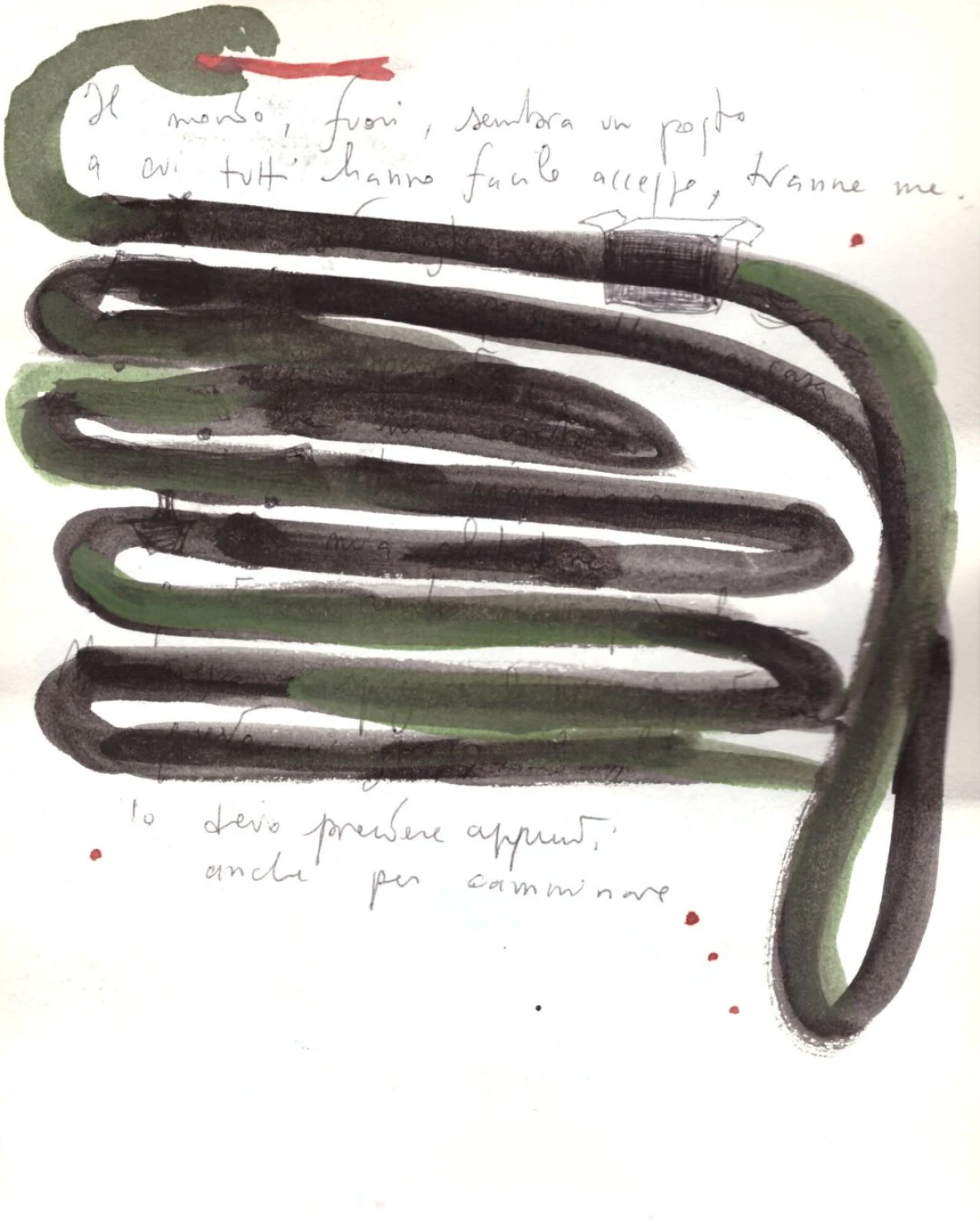
The writing I propose is inspired by the question "What does literature have to tell us about the position of women in society?" but it narrows the field to Italian Literature in the context of school teaching.
Feminism is for losers
I chose as title the answer that a student gave me to the question: "What do you think about feminism?". I was teaching in state school, it was the end of the academic year and the school text included an optional box on the Suffragettes (1).
“Feminism is for losers” said Sara, a 14 years old girl. Paradoxically, hers was not a confrontational statement, she was just expressing a great frustration: feminism is for losers because it is useless.
The class had heard the word many times but no one knew its meaning, although they were all certain that it must have a negative connotation ("it's like those crazy people who protest in pink", literally quoting someone). During the discussion Sara also pointed out how in the art manual Artemisia Gentileschi was reported in a couple of lines at the end of the chapter on Caravaggio, without even an image of her canvases. And this seemed to cause her an inexplicable anger.
The students' perception that emerged from the debate is that of a school forced to administer yet another academic purge (“the role of women”) to satisfy yet another institutional hypocrisy (“we are all the same”): but deep down the kids know that it's just a "farce" - in their words - "like fire drills".
The female issue like a safety simulation: it is mandatory to do it but not to learn it because it is a "fake thing", a pure formality, "stuff for losers".
I thought about this episode while I was choosing the topic for the essay; so I decided to pick up the Italian Literature manual from Sara's class again, to try to reconstruct which vision of women emerges from a certain way of presenting culture. I picked up my University Italian Literature textbook as well, to see how it addressed the same themes. But – surprisingly to me - in both cases, I didn't need to search inside the text, I could just stop at the index.
I chose to deal with this topic by remaining there: on the surface, on an index; because indexes are sort of a surface when they present their content and indicate its salient elements. I chose to stay on the surface because I find it important: surface guides most people; and it too has its – dangerous – depths.
Here I report the two indexes for comparison: the first is that of my University Italian Literature manual (2). The second is that of Sara’s class (3).
The University book begins by asking "What is a classic?" and the first author to appear is Saint Francis of Assisi. Following is a list of themes, dates and names (including the artist Michelangelo Buonarroti) ranging from Renaissance to Postmodernism. The only woman to appear is Elsa Morante (third to last line).
The second text is intended for a younger and more heterogeneous target that has yet to build a base and cultural references. A list of names, divided by century and style of the period, featuring the inventor of the telegraph, Guglielmo Marconi. Grazia Deledda, the only Italian woman honored of the Nobel Prize for Literature is, here too, the only woman on the list.
In both cases the only woman on the list (Morante, Deledda) does not appear as first or only reference of a movement but is buried among other names. Another curious similarity lies in the fact that both indexes include historical figures outside of the ordinary literary panorama (Michelangelo, Marconi).
A few questions arise spontaneously: why is there strictly only one woman in each list? Where are all the others? And why, when there is an important gap in literary gender representation, do male characters from other cultural fields appear instead?
I am not writing to answer these questions but to ask myself what effect similar presentations can have on a neophyte in literature, on a student, on an average reader. Or on those who simply browse books, choosing and discarding what they will read based on the great names they remember. Or who decide the value of people, based on what they have achieved.
If I looked at the index of the school manual with Sara's eyes, wouldn't I suffer from not seeing women's names? Probably not in the way I think. Sara, like a good part of the Italian female population, is used to invisibility, to not find their gender represented, except in an optional box at the edge of the page (like that of the Suffragettes). Female invisibility is a problem precisely because of its being invisible: how can I reason about something that is not there? The equal rights of women and men - on paper and in words - lead us to think that disparity and injustice are a past chapter of our history. The school itself consolidates this vision when it does not remember that the only successful revolution in the Western world is the female one.
School books written by men about the history of men paint a world in which feminism is not important. And how could it be if women do not appear in history? For the younger ones who have just started studying this contradiction is not clearly perceived except as indistinct frustration (as when Sara complained about the lack of Gentileschi's paintings in the art book) and, even worse, it is just accepted as normality. Partiality - because invisibility is both a product of cultural partiality and of its historical legacy - is in this order suffered, accepted, transmitted. No student would doubt that school textbooks are wrong, because school is the official custodian of knowledge. For this reason the problem of invisibility remains invisible even to the university students who find in their institutional text all the Greats they have already studied at high school. What they may think is that if other names do not appear on that list, it is because they are necessarily secondary. But they can't really think about the “other names”. How could they? They don’t know them.
How can Sara's class perceive that one woman on the list? Like a fire drill: the regulation forces you to tick that box. One simulation per year and one woman on the list. How can the passionate humanist who enrolls at the University perceive that one woman? As an exception. A historical exception, because it is well known that history was made by men. Or a gender exception, because if that particular woman was successful it is because she was atypical from the rest of her gender. But in no case the nature of this exceptionality is linked to a system that does not allow certain categories to emerge.
The freedom of the indexes which, despite the stringent list, choose to include Michelangelo and Marconi also helps to reinforce these readings.
Two manuals, with such a heterogeneous target of readers, by different editors, from different decades, both give space to two characters external to Literature and choose not to list more than one great female name.
What I want to underline is not a malicious desire to obscure female contributions to history but at least the obtuse iteration of exclusionary models that reproduce themselves in the reader's gaze and orient it towards a single - partial - perception.
What does Italian literature have to tell us about women? Invisibility. Even in the indexes of manuals.
I use the word invisibility but one could also dare say "inferiority": because praising Marconi's very boring and "antilinguistic" (4) text on syntonic radiotelegraphy instead of Ada Negri' short novels (5) is in fact telling me which text and which author is more worthy of note. Who's on the podium and who's out. And if this illegible text is in the manual and Ada Negri's isn't, it must mean that her stories are even worse.
As Sara and her class had already clearly perceived, the message that emerges from this type of approach is: first of all let's learn the basics of our culture (which is masculine). Once this is done we can see the optional (which is feminine).
But what - perhaps - is worse is the impression that female cultural production is "lesser" not only in quality but also in quantity, which is why it consequently finds little space in manuals. It is not so.
Someone might say that the index lists the names of those who are most important: who have received greater recognition, those who created something that still has a strong influence today or those who were a true “genius” when compared to their social condition. In this regard, to respectively refute these three points, for each great author who appears in the indexes I chose a great woman who was their contemporary.
Matilde Serao was the first Italian woman to open and direct a newspaper (Il Mattino, that is still active today). Journalist, activist, novelist, she wrote "The belly of Naples" (Il ventre di Napoli, 1884), coining one of the metaphors most used by subsequent writers to describe the city: the womb. Serao belongs to the realist genre, she was a contemporary of Giuseppe Verga: why doesn't she appear on the index? Small spoiler: she doesn't appear anywhere at all in those textbooks. She has been nominated for the Nobel Prize six times, Verga not once.
Anna Maria Bellonci was the creator and co-founder of the Strega Prize, one of the most prestigious literary competitions in Italy, which still today constitutes a watershed in the narrative panorama of the peninsula. Acute intellectual, she was the first Italian author to embody the gaze of a female character in historical novels. She returned to Italian history the voices that were missing and she gave a new perspective from which to look at the historical events. Why is her name not listed but that of a winner of the competition she created is (Alberto Moravia)? Small spoiler: the Strega Prize is mentioned in the manuals, but Bellonci's name is not.
Anna Maria Ortese, a contemporary writer of Italo Calvino, also won the Strega Prize but her name does not appear on the list. Unlike her overwhelmingly male colleagues who won the same prize she did not receive a regular school education: Ortese was almost completely self-taught.
I would have also liked to add the story of Saint Rita of Cascia, to accompany that Saint Francis who stands out so much in the university list, but I'll stop here. The stories are many, too many. What matters is to note how completely arbitrary the selection of names appearing on the list is. And how the names that appear do not necessarily represent records compared to the names that do not appear. On the contrary.
Indexes, presentations, surfaces are important: they are the first things we look at. They are what tells us what is essential to know. They are what builds our expectation and shapes our gaze. Or what conditions it.
For many students the names appearing on their secondary school textbook index are likely to be the only ones they will have dealt with in their entire lives. The same names on the index also represent for the professor the names that are taught and that are important to remember. Neither the class nor the teacher know what is so special about the writing on the radiotelegraph, but if it is there, there must be a reason.
The female figures integrated into Italian school curricula who do not find space in the list find space at the end, like small print or in the form of optional focuses: what is perceived is that women are sort of a surplus, not an integral part of the historical and cultural process. And this is a form of normalization of the social and professional invisibility of women to which we are all exposed, men and women, students and teachers. The fact that the only woman to appear in a twentieth-century chapter of Italian literature is the only one to have won the Nobel prize reminds women that it is necessary to reach the absolute ceiling to deserve a mention. Male colleagues, it seems, don't need too many medals to be on the list and represent culture.
For girls and boys like Sara, having to read a few lines on the importance of women's struggle after hundreds of pages of male names - and readings - is useless.
They perceive the contradiction, they experience it as hypocrisy: it is clear to them that women don't matter much but, since there is the imperative of political correctness, hey presto we get the matter resolved with the special mention.
Kids seem to be asking, “What is this importance of feminism? Show it to us, because we can't see it" and, I add: "but we need it".
Notes
(1) I report the name as it appears in the school text.
(2) Gino Tellini, Letteratura Italiana. Un Metodo di Studio (Milano: Mondadori Editore, 2014).
(3) Pietro De Paolis, "Indice", Scuola Elettrica, (Pietro De Paolis, 2022). Available: https://www.scuolaelettrica.it/superiore/italiano/indice.htm [Accessed: 9 March 2024].
(4) I used the term “anti-linguistic” from an article by Italo Calvino (“Il Giorno”, 1965) in which he describes “the art of complicating a simple language” reporting examples of bureaucratic and scientific writings as opposed to the authentic meaning of communicative language.
(5) I chose Ada Negri as a character to contrast with Guglielmo Marconi because she is a figure as great as she is unknown: with her book “Le Solitarie” (1916) she deals with themes that are still alive - and still taboo - in Italy, such as abortion, sexual harassment and non-naturalness of the maternal instinct in women.